Basilica Cistern
Istanbul, an important city that has been occupied many times in all periods of history, is equipped with water cisterns at the order of Byzantine emperors to meet the water needs of the city. The cistern, built by Emperor Justinianos in the 6th century, met the people’s water needs for a long time during the Ottoman Period.
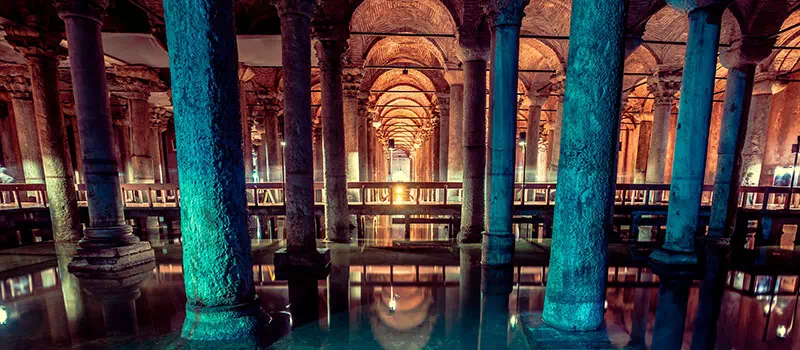
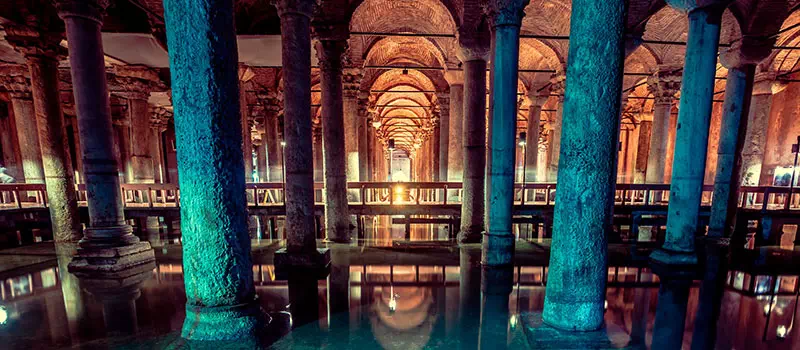
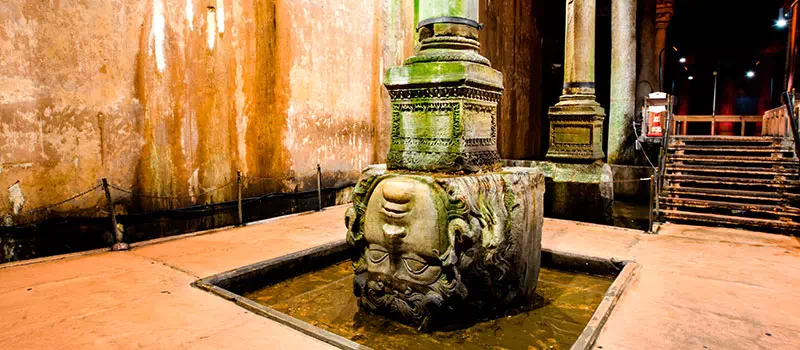
The upper part of the cistern is closed and there are 336 columns arranged in 12 rows with four-meter intervals. The two columns in the northwest corner of the cistern and the two Medusa heads made under the base are examples of the sculpture art of the Roman Period.
What are worth seeing in Basilica Cistern?
1. With its majestic columns and mysterious sculptures
The Basilica Cistern impresses with its 9 meter high 336 columns and 2 Medusa sculptures.
It is believed that Medusa, one of the most famous characters of Greek mythology, was one of the Gorgon monsters, which, according to a legend, had the power to turn the ministers into stone, while the Gorgon paintings and sculptures were used to preserve large structures and private places, and therefore the sculptures were placed for this reason.
2. A column inside the cistern
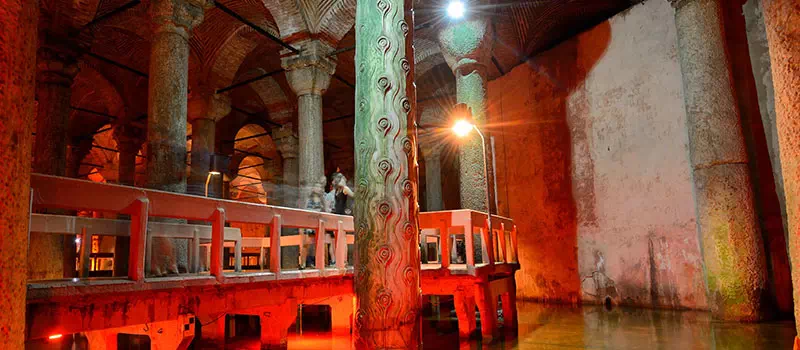
A column inside the cistern is separated from the others by the rumors about it. This column is shaped by peacocks, drooping branches and tear reliefs and carvings and is known as the “weeping column”. According to the rumors, in the 38-year construction of the cistern, 7,000 slaves worked and hundreds of them died and this column was erected in their memory.
3. A stone staircase with 52 steps
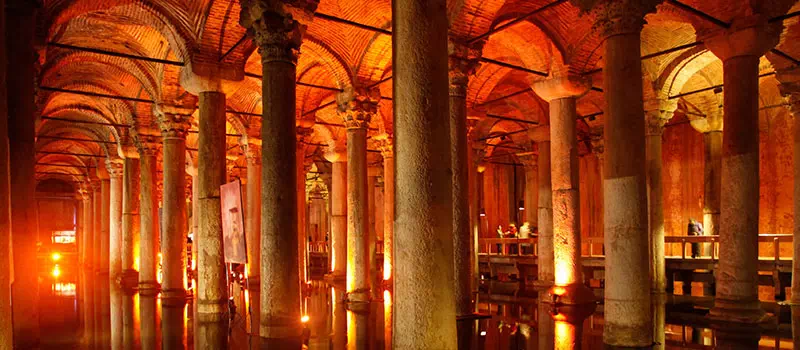
After descending a 52-step stone ladder, 336 columns you will see make the architecture of the cistern unique. These columns and their capitals rising in a water tank are impressive enough to make it known by the public as “Basilica Palace”.
4. Dutch traveler Petrus Gyllius
The dark world of the Basilica Cistern is illuminated in the mid-16th century thanks to the Dutch traveler Petrus Gyllius. Coming to Istanbul to investigate ancient texts, the traveler learns that there is a hole in the ground floors of the houses around Hagia Sophia, where people drove buckets and draw water and fish. When he finds a way to get inside, a torch and sandal cistern wanders, and he introduces this fascinating place to the West.
Plan Your Visit with Acetes Travel
Reading about What to See in Basilica Cistern? See how Acetes Travel can make it part of your Istanbul itinerary — book direct, free cancellation, 24/7 WhatsApp support.
Explore the Istanbul Old City Day Tour →